The American Privacy Rights Act: What APRA Means for Your Business
The American Privacy Rights Act would mark a turning point in US privacy law, introducing sweeping obligations around data minimization, algorithmic accountability, and individual rights. Here is what organizations need to know about APRA's scope, requirements, and compliance timeline.


For the longest time, the United States was one notable outlier in the global trend toward comprehensive, federal-level privacy legislation. While 137 nations worldwide had enacted broad privacy frameworks, the US relied on a patchworked approach: sector-specific rules like HIPAA for healthcare and GLBA for financial services, layered under a growing number of state laws that now number 15, with two more on the way.
That may be about to change. The American Privacy Rights Act (APRA) represents the most serious attempt in years to bring the US in line with the rest of the world on privacy, and its discussion draft text contains provisions worth examining closely. Whether you work in healthcare, financial services, insurance, or any other data-intensive industry, APRA could reshape how your organization handles personal data across the board.
What Is the American Privacy Rights Act?
APRA is proposed federal privacy legislation in the United States designed to establish a uniform national standard for the collection, processing, and transfer of personal data. Unlike existing sector-specific laws, APRA would apply broadly across industries and entity types, creating a single federal baseline that largely preempts state privacy laws, though with notable exceptions.
The act introduces obligations familiar to anyone operating under the EU's General Data Protection Regulation (GDPR), including data minimization, individual access and deletion rights, and privacy impact assessments. But APRA also breaks new ground in several meaningful ways, particularly around algorithmic accountability and the centralization of consumer opt-out mechanisms.
Who and What Does APRA Cover?
Which organizations fall under APRA's scope?
APRA introduces a broad scope of applicability, extending beyond the for-profit businesses covered by most state laws to include non-profit organizations as well. Small businesses are generally exempt unless they engage in selling data or handle personal information on more than 200,000 individuals for purposes other than collecting payment for requested services.
The legislation distinguishes between "covered entities" and "service providers," language intentionally reminiscent of the GDPR's distinction between data controllers and processors. This distinction clarifies where primary responsibility for compliance rests. Under APRA, covered entities bear the principal obligations, while service providers may store or process data on behalf of covered entities in a limited capacity without taking on the full weight of control.
Data brokers and large data holders face heightened obligations under the act. Data brokers would be required to register with the Federal Trade Commission (FTC) and honor do-not-collect requests. Large data holders must provide concise privacy notices capped at 500 words, and both categories must respond to individual access, correction, and deletion requests within 15 days, half the time allotted to standard covered entities. APRA also includes specific provisions for high-impact social media platforms, recognizing their outsized role in the collection and processing of personal data.
Organizations operating in regulated industries, including healthcare, financial services, insurance, and contact centers, should pay particular attention, as APRA would layer federal obligations on top of, or in some cases replace, existing sector-specific requirements.
What types of data does APRA regulate?
In terms of data types, APRA takes a comprehensive approach, covering any data that can be linked to a specific individual, including a broad category of "sensitive data." That definition reaches further than most Americans might expect: it includes biometric details, calendar information, call logs, and online activity over time. This scope is meaningfully wider than what most US state laws cover, and it exceeds even what the GDPR designates as "special categories of data."
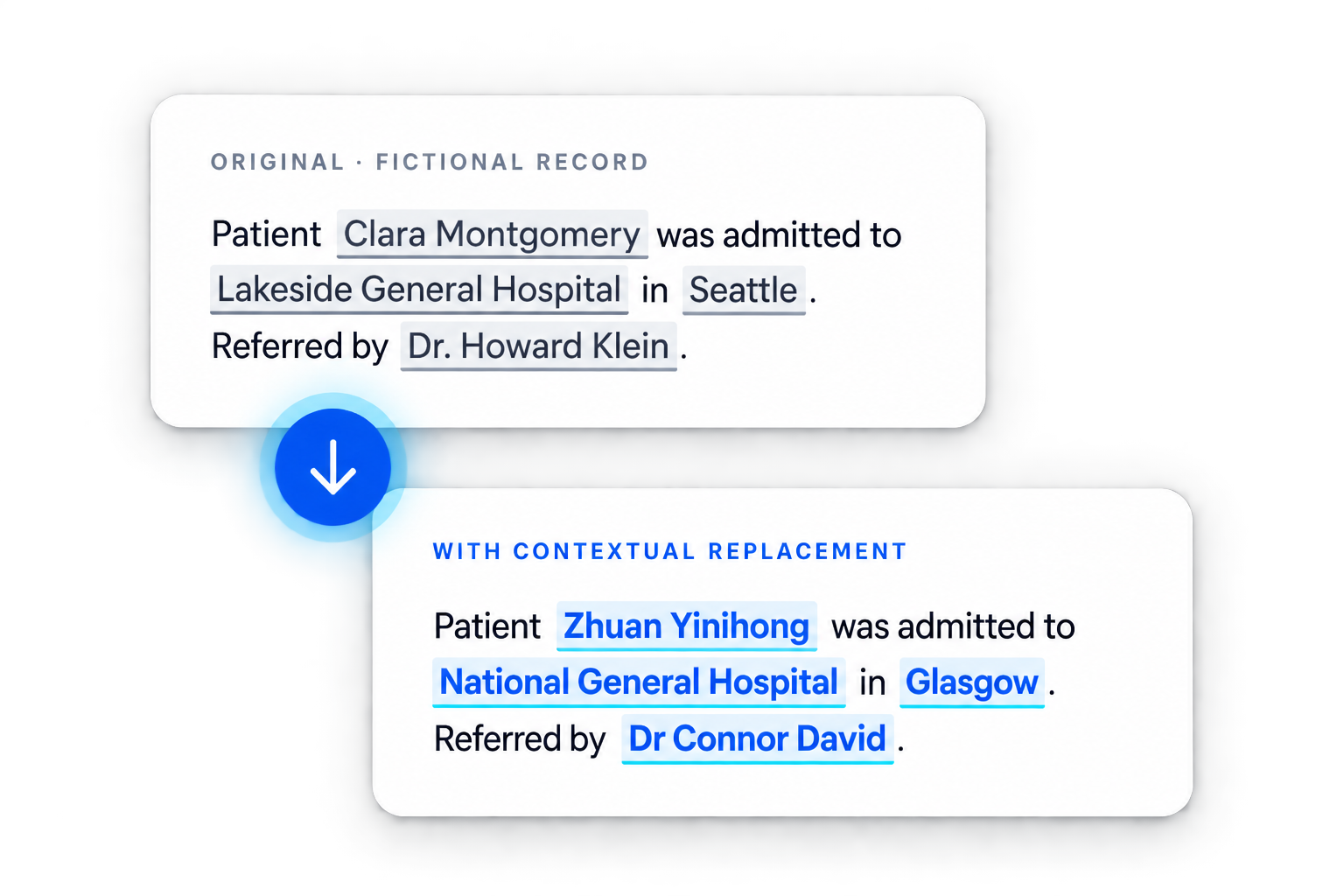
Notably, APRA excludes employee data from its scope, a contrast to California's approach. It also excludes de-identified data, provided organizations meet a fairly rigorous standard. Under APRA, de-identified data is defined as information that cannot reasonably be used to infer or derive the identity of an individual, where the covered entity takes reasonable physical, administrative, and technical measures to prevent re-identification, publicly commits to processing that data only in de-identified form, and contractually obligates any downstream recipients to comply with the same requirements.
This exclusion creates a significant compliance pathway for organizations. Properly de-identified data falls outside APRA's regulatory reach entirely, which means investment in robust data de-identification is not just a best practice under APRA, it is a direct mechanism for reducing compliance burden.
How Does APRA Compare to GDPR?
What does APRA borrow from European privacy law?
Several of APRA's foundational concepts will feel familiar to compliance professionals with GDPR experience. The act incorporates individual rights to access, correction, deletion, and portability, with a carve-out for data held exclusively on a device. The covered entity / service provider distinction mirrors the controller / processor framework in European law, and concepts like data minimization and privacy impact assessments appear in both frameworks, albeit with differences in how they are defined and applied.
Where does APRA break new ground?
The most significant departure from existing frameworks, including the GDPR, is APRA's approach to individual control. Rather than placing the burden of privacy protection on consumers, who must visit each website individually and navigate dense privacy policies few people read, APRA proposes a centralized opt-out mechanism. This would allow individuals to opt out of two categories of processing across all covered entities at once: transfers of their data to service providers and use of their data for targeted advertising.
The philosophy here is meaningful. If individuals can signal their preferences once, through a centralized mechanism, they are far more likely to exercise those rights than if they must do so repeatedly, site by site.
APRA's data minimization standard reflects the same thinking. Under Section 102 of the act, covered entities are permitted to collect, process, retain, or transfer personal data only to the extent necessary to provide a specific product or service the individual requested, or to communicate with them in a way that is reasonably expected given the relationship. Beyond that, there is a defined list of 17 additional permitted uses. Crucially, this restriction cannot be waived by obtaining consent. APRA deliberately removes the option for covered entities to use consent as a workaround for broader data collection, a direct response to the widespread use of "dark patterns" that make consenting far easier than refusing.
This represents a notable contrast to the GDPR's legitimate interest provision, which requires organizations to conduct a balancing exercise weighing their interests against those of the individual. APRA offers more structural clarity: if a use case falls within the permitted list, it is lawful. If it does not, consent does not save it.
One earlier point of contention in the original discussion draft concerned the interaction between data minimization and targeted advertising. The initial version excluded sensitive data from targeted advertising but defined sensitive data so broadly that much of the information required for targeting, including data revealing online activity over time, would have been off-limits. The revised draft resolved this by carving out those data elements for adults and permitting their use in targeted advertising, while preserving protections for minors. The revised draft also clarified that an individual's opt-out from targeted advertising overrides the general permission granted under data minimization provisions.
Another fix in the revised draft addressed service providers directly. Earlier language appeared to impose data minimization obligations on service providers even when they lacked the information to determine whether those obligations were met. The current version clarifies that data minimization requirements apply to covered entities, not service providers.
If you are working through what these distinctions mean for your organization's data practices, speaking with the Limina team is a useful starting point.
How Does APRA Address AI and Algorithmic Decision-Making?
What are "covered algorithms" under APRA?
APRA takes a direct approach to the growing use of automated decision-making. The draft introduces the concept of "covered algorithms," defined as computational processes that use machine learning, statistical methods, or other AI techniques to make or assist in making decisions based on personal data, particularly where those decisions involve recommending or delivering products or services to identifiable individuals.
Individuals would have the right to opt out of decisions made by such algorithms when those decisions are deemed "consequential." A consequential decision is defined under the act as one that determines eligibility for, or results in the provision or denial of, housing, employment, credit, education, access to public accommodations, healthcare, or insurance.
What algorithmic impact assessments does APRA require?
Large data holders using covered algorithms to make consequential decisions are required to conduct algorithmic impact assessments, either internally or through an independent auditor. These assessments must document the algorithm's design, purpose, training data, outputs, evaluation metrics, post-deployment monitoring processes, and potential harms related to protected characteristics, including whether individuals affected are minors, along with the mitigation measures taken.
If an independent auditor conducts the assessment, the entity must notify the National Telecommunications and Information Administration (NTIA) that it has been completed. If no independent auditor is involved, the assessment itself must be submitted to the NTIA. The NTIA is tasked with reporting on best practices for mitigating identified harms, starting three years after the law's enactment. Original drafts had assigned this oversight role to the FTC; the current version shifts certain responsibilities to the NTIA while the FTC retains enforcement authority more broadly.
Impact assessments must be retained for five years and made available to Congress upon request. Organizations may publish a public summary voluntarily, but this is not required.
APRA also requires developers to evaluate algorithm designs before deployment, with a focus on identifying and mitigating potential discriminatory outcomes or adverse effects on access to essential services. The act further includes civil rights protections, prohibiting the discriminatory application of personal data in the provision of goods or services, with exceptions for activities designed to prevent discrimination or advance diversity.
For organizations in pharma and life sciences or healthcare that rely on predictive algorithms for clinical or operational decisions, these requirements are worth monitoring closely as the draft evolves.
How Will APRA Be Enforced?
Who has authority to enforce APRA?
Enforcement under APRA is a cooperative effort. The FTC, state attorneys general, each state's chief consumer protection officer, and authorized state offices are all empowered to bring enforcement actions. The FTC retains rulemaking authority to define what "reasonably necessary" means under the data minimization provisions, though the discussion draft would terminate the FTC's commercial rulemaking powers in other respects.
Does APRA include a private right of action?
Yes, and this is one of the more consequential aspects of the legislation. APRA grants individuals a private right of action, allowing them to bring lawsuits against entities that violate certain privacy rights. Plaintiffs may seek damages, injunctive relief, and declaratory relief, and the act allows for recovery of reasonable legal and litigation costs to ensure that financial barriers do not deter individuals from pursuing claims. Mandatory arbitration cannot be imposed on consumers claiming substantial privacy violations, defined as financial harm exceeding $10,000, certain forms of physical or mental harm, or any harm to individuals under 18.
Data minimization obligations are notably excluded from the private right of action, meaning individuals cannot sue directly for violations of the data minimization standard, though regulators still can.
What Is APRA's Compliance Timeline?
APRA proposes a 180-day enforcement window from the date of enactment, giving organizations roughly six months to build out their compliance programs. For context, the EU AI Act granted businesses two years from the time it came into force to comply with most of its obligations. The APRA timeline is ambitious, and the final version of the legislation may adjust these deadlines. Organizations should begin scoping compliance efforts now rather than waiting for a final text.
Can De-identification Resolve the Tension Between Data Minimization and AI?
One argument that surfaces consistently in discussions of APRA, and of AI regulation more broadly, is that data minimization and AI development are fundamentally incompatible. The concern is that AI systems require large volumes of training data, and minimizing that data undermines model performance.
We think this misframes the problem. The real question is not whether organizations can use less data, but whether the data they use needs to contain personally identifiable information. In most cases, it does not.
Limina's data de-identification solution is built by linguists, which means it understands language contextually rather than relying on pattern matching alone. It can identify and remove personally identifiable information across more than 50 entity types in 52 languages, processing documents at 70,000 words per second with 99.5% or greater accuracy. What remains after de-identification is data that retains its analytical and training value while falling outside APRA's regulatory scope entirely.
For organizations building AI systems on sensitive data, this is not a workaround. It is a principled approach to compliance that aligns with what APRA's data minimization provisions are actually trying to achieve: ensuring that individuals are not exposed to privacy risks from data use they never anticipated and cannot control.
If your organization is beginning to think through what APRA compliance might require, connect with Limina to see how de-identification fits into your data governance strategy.