The Evolving Landscape of Health Data Protection Laws in the United States
From the Privacy Act of 1974 to AI-driven diagnostics, US health data protection law has had to continuously evolve alongside the technology it governs. This article traces that legislative journey and examines what regulated organizations need to understand today.


The healthcare sector in the United States has seen a profound transformation in its approach to data privacy, one that has closely paralleled the rise of electronic health records, AI-assisted diagnostics, and consumer health technology. What began as a loose collection of federal privacy principles in the 1970s has grown into a complex, multi-layered regulatory framework that affects everyone from hospital networks to app developers. Understanding how that framework evolved, and where it still falls short, is essential for any organization that handles health data today.
How Did US Health Data Protection Begin?
The story of health data protection in the United States does not begin with a healthcare law. It begins with a broader concern about government record-keeping and individual privacy. The Privacy Act of 1974 established the foundational principle that federal agencies must regulate how they collect, maintain, use, and share personally identifiable information about individuals. While this law was not specific to healthcare, it introduced the idea that personal data held by institutions carries a duty of care, a concept that would eventually become central to health data regulation.
Around the same time, the Health Maintenance Organization Act of 1973 brought a new model of managed care into federal policy. Although the act was primarily designed to support the establishment and expansion of HMOs, it also set early standards for medical record-keeping within those organizations. Together, these two pieces of legislation established a baseline concern for personal data in federally connected systems, even if digital health records were not yet part of the picture.
The significance of this period is not what it accomplished, but what it anticipated. Policymakers were beginning to recognize that as institutions gathered more data on individuals, the rules governing that data mattered. That recognition would become urgent by the 1990s.
What Did HIPAA Change for Health Data Privacy?
The enactment of the Health Insurance Portability and Accountability Act (HIPAA) in 1996 marked the first time the United States had a comprehensive federal framework specifically designed to protect health information. HIPAA was originally focused on helping workers maintain health insurance coverage between jobs, reducing healthcare fraud, and simplifying administrative communications. However, the accelerating digitization of health records made it clear that a more robust privacy and security architecture was needed.
That architecture came in two parts. The Privacy Rule, finalized in December 2000 and in effect by April 2003, established national standards for how covered entities, including healthcare providers, health plans, and healthcare clearinghouses, could use and disclose protected health information (PHI). The rule defined what counted as PHI, who had rights over it, and what conditions governed its disclosure.
The Security Rule, finalized in 2003 and implemented in 2005, complemented the Privacy Rule by addressing electronic protected health information (ePHI) specifically. It required covered entities to implement administrative, physical, and technical safeguards to protect the confidentiality, integrity, and availability of ePHI. In practice, this meant that organizations could no longer treat digital health records as simply a more convenient form of paper files. They required active, documented security measures.
What made HIPAA genuinely significant was its scope. Unlike the fragmented legislation that preceded it, HIPAA applied across the entire healthcare industry, reaching providers, insurers, and the third-party vendors who worked with them. It created accountability at scale and introduced penalties for non-compliance that gave the regulations real teeth. For healthcare organizations operating in a world of increasingly networked information systems, HIPAA was not just a compliance requirement. It was a structural shift in how health data had to be handled.
If your organization is navigating HIPAA compliance and managing large volumes of protected health information, speak with Limina's team about how automated de-identification can reduce your compliance burden without slowing down operations.
How Did the HITECH Act Accelerate Electronic Health Record Adoption?
For all that HIPAA accomplished in the late 1990s and early 2000s, the actual adoption of electronic health records remained surprisingly low. As late as the mid-2000s, the majority of clinical documentation was still paper-based. The systems existed, but uptake was slow. That changed dramatically with the Health Information Technology for Economic and Clinical Health (HITECH) Act, enacted in 2009 as part of the American Recovery and Reinvestment Act.
Before HITECH, only 9 percent of hospitals had adopted EHR systems. By 2021, that figure had risen to 96 percent, with 78 percent of office-based physicians also using EHR. That transformation was not accidental. The HITECH Act channeled billions of dollars in financial incentives toward healthcare providers who adopted and meaningfully used certified EHR systems. It then introduced financial penalties, beginning in 2015, for Medicare providers who failed to demonstrate meaningful use. The result was one of the most rapid and consequential technology adoption curves in the history of US healthcare.
HITECH also strengthened the legal framework around electronic health records directly. It updated HIPAA's Security and Privacy Rules to address privacy and security concerns specific to the transmission of electronic health data, and it extended certain HIPAA obligations to business associates, the vendors and contractors who handle PHI on behalf of covered entities. This extension closed a significant gap in the original HIPAA framework, which had largely focused on covered entities themselves. Additional privacy and security provisions introduced under HITECH made it harder for organizations to treat data breaches as a minor compliance issue and quietly move on.
The infrastructure supporting all of these EHR systems is primarily provided by private companies rather than the federal government. While the Office of the National Coordinator for Health Information Technology (ONC) plays a central role in setting standards and certification criteria, organizations like Epic Systems, Cerner Corporation, and Allscripts actually build and maintain the platforms that hospitals and clinics use. These companies compete to offer solutions that meet government certification requirements, including support for meaningful use capabilities such as e-prescribing, electronic exchange of health information, and clinical decision support.
The transition to EHR was not without friction. The challenges that slowed adoption included high implementation costs, complex integration requirements, concerns about interoperability between competing platforms, and genuine resistance from clinicians whose workflows were disrupted. Those concerns did not disappear once adoption rates climbed. Interoperability, in particular, remains an ongoing challenge: the fact that a hospital uses an EHR system does not mean its records can be easily shared with another facility running a different platform. Subsequent legislation, including the Medicare Access and CHIP Reauthorization Act of 2015 (MACRA), continued to refine EHR requirements and tie them more directly to quality and reimbursement frameworks, but the underlying fragmentation of health data infrastructure has not been fully resolved.
What Role Do State Health Privacy Laws Play Alongside HIPAA?
HIPAA sets a national floor for health data protection, but it does not prevent states from going further. Many have. California's Confidentiality of Medical Information Act (CMIA) is one of the most prominent examples, providing protections for medical information that go beyond HIPAA's scope in several respects. Other states have enacted their own health privacy statutes that address specific gaps in federal law or respond to local policy priorities.
The practical effect of this state-level activity is a patchwork of regulations that healthcare organizations must navigate simultaneously. A hospital system operating in multiple states is not simply managing one set of compliance requirements. It is managing several, each with its own definitions, obligations, and enforcement mechanisms. This complexity is especially pronounced for organizations that share data across state lines, conduct multi-site clinical research, or work with national health insurers.
For pharma and life sciences companies conducting research across state jurisdictions, this regulatory layering creates significant data governance challenges. Identifying what counts as protected health information, ensuring appropriate de-identification, and documenting compliance across both federal and state requirements demands a level of operational precision that manual processes are increasingly unable to provide.
How Does Mobile Health Technology Create New Privacy Gaps?
The proliferation of consumer health technology, including fitness trackers, health monitoring apps, and remote patient monitoring platforms, has created a category of data that existing regulations struggle to cover consistently. HIPAA was designed around a specific set of actors: covered entities and their business associates. Many mobile health app developers fall outside that definition entirely.
A fitness app that collects heart rate data, sleep patterns, and caloric intake directly from a consumer is not billing an insurer or exchanging records with a physician in the normal course of its operations. That means it is not necessarily a covered entity under HIPAA, even though the data it holds can be highly sensitive. Without HIPAA's constraints, the data handling practices of these apps can vary considerably, and there is no federal requirement that they apply the same rigor to data protection that a hospital would.
This gap is not hypothetical. Apps that share health data with advertisers, use it to train proprietary algorithms, or fail to implement basic security controls have created real privacy risks for users who reasonably assumed their health information was protected. State laws, consumer protection enforcement, and Federal Trade Commission guidance have begun to address some of these practices, but the regulatory landscape for consumer health technology remains fragmented and inconsistent. For organizations operating in the insurance industry or contact centers that interact with health data collected through third-party digital channels, understanding where those gaps exist is an important part of managing compliance risk.
What Privacy Challenges Come With AI and Machine Learning in Healthcare?
Artificial intelligence and machine learning are being applied across virtually every domain of healthcare, from diagnostic imaging and drug discovery to clinical decision support and patient triage. The promise is substantial. So are the privacy challenges.
AI systems require large, richly annotated datasets to train algorithms that can make reliable predictions. In healthcare, those datasets almost inevitably contain personal health information. Under HIPAA, using patient data for AI training is tightly regulated. Patients generally have rights over how their data is used, and organizations are required to implement appropriate safeguards. But the nuances of AI development complicate compliance in ways that are not always straightforward.
One issue is re-identification risk. HIPAA permits the use of de-identified data without patient authorization, but de-identification is not a permanent guarantee of anonymity. AI systems that combine de-identified datasets with other data sources, or that generate outputs that can be traced back to individuals, may inadvertently undermine the privacy protections that de-identification was intended to provide. Ensuring that de-identification is robust enough to withstand these risks requires methods that go beyond simple field removal.
Another issue is bias. AI models trained on datasets that do not adequately represent all demographic groups can produce results that are systematically less accurate for underrepresented populations. In a healthcare context, that disparity can have direct consequences for patient care. Addressing algorithmic bias requires careful attention not only to how data is collected and labeled, but also to how models are validated and monitored after deployment. This is an ethical and clinical concern as much as a technical one.
For organizations in financial services and other regulated industries that are beginning to apply AI to datasets that include health-adjacent information, these challenges are not abstract. They are operational realities that require deliberate governance frameworks and the right technology infrastructure to manage properly.
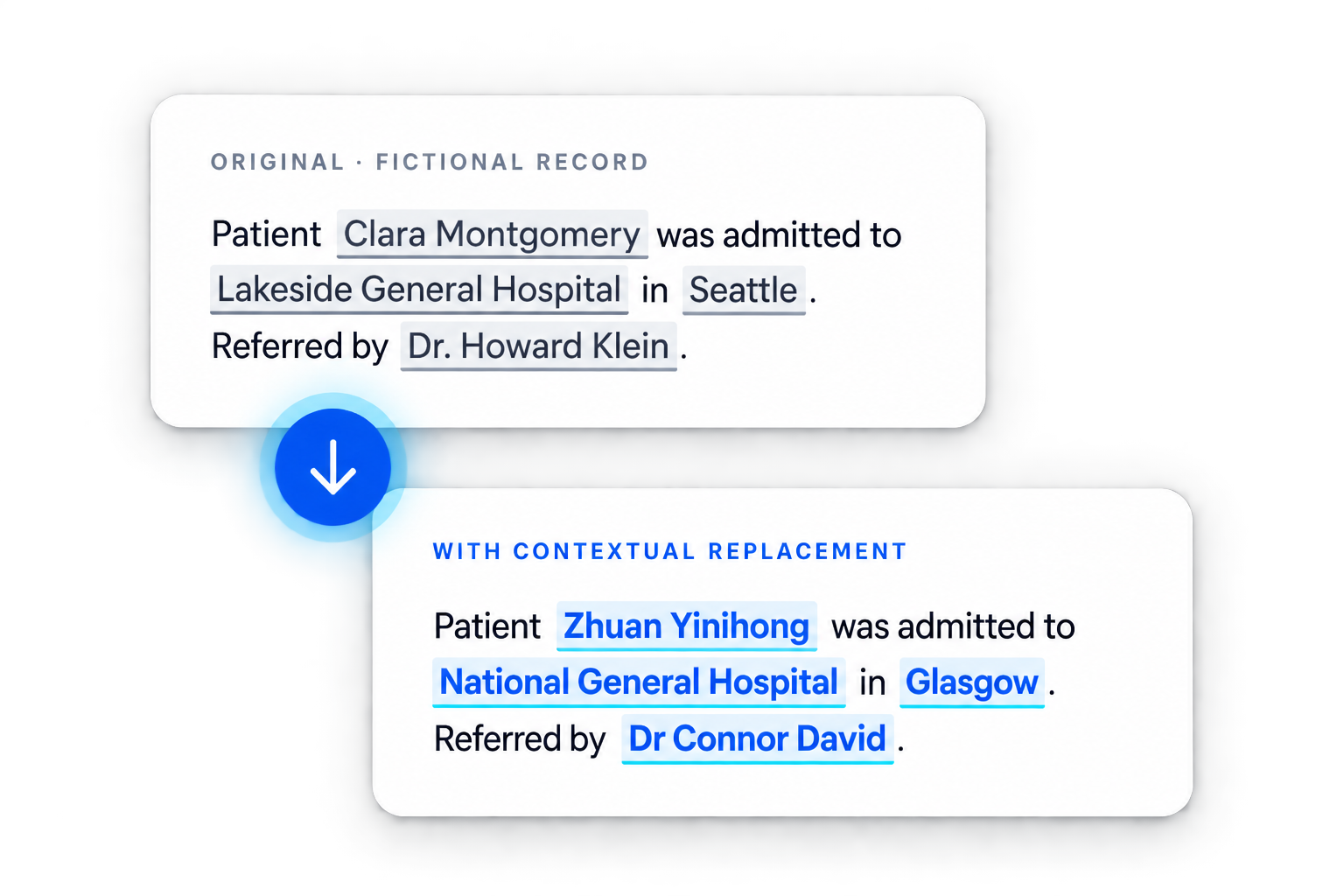
Limina's data de-identification platform is built by linguists, which means it understands context, not just patterns. Where rule-based tools strip fields based on format, Limina identifies entities by understanding how they function within a document, making de-identification more accurate, more consistent, and more defensible under regulatory scrutiny. Contact us to learn how Limina can support your AI data pipeline while keeping you on the right side of HIPAA.
Where Is US Health Data Protection Headed?
The trajectory of US health data protection law has been one of progressive expansion, from broad federal privacy principles in the 1970s, to a comprehensive healthcare-specific framework under HIPAA, to an ongoing effort to keep pace with technologies that lawmakers could not have anticipated when the foundational rules were written. That effort is far from complete.
The core challenge is one that has defined this space from the beginning: balancing the genuine value of health data for research, clinical improvement, and operational efficiency against the legitimate privacy interests of patients. That balance does not have a fixed answer. It shifts as technology evolves, as public expectations change, and as new actors enter the healthcare data ecosystem.
What is clear is that organizations handling health data today cannot treat compliance as a static checklist. HIPAA remains the cornerstone of US health data protection, but it exists within a broader and increasingly dynamic regulatory environment. State laws continue to develop. Federal guidance on AI and digital health is actively evolving. And the definition of who qualifies as a covered entity or business associate is under ongoing scrutiny as consumer health technology becomes more central to how Americans manage their health.
Organizations that approach health data governance proactively, with the right tools and frameworks in place, are better positioned to adapt as these regulations develop. Those that treat compliance as a reactive exercise are likely to find themselves perpetually behind.