Who is Responsible for Protecting PII?
Protecting personally identifiable information is not the job of any single person or team. This guide breaks down the layered responsibilities of individuals, organizations, and governments, and explains what each must do to prevent data breaches, meet regulatory requirements, and earn the trust of the people whose data they hold.


Personally identifiable information (PII) is any data that can be used to identify an individual directly or indirectly. Names, social security numbers, dates of birth, email addresses, IP addresses, ZIP codes -- the list is longer than most people expect, and the stakes attached to it are higher than most organizations are prepared for. When PII falls into the wrong hands, the consequences range from identity theft and financial fraud to regulatory fines and lasting reputational damage.
So who is actually responsible for protecting it?
The honest answer is: everyone. But that answer is not especially useful on its own. Responsibility for PII protection is distributed across three distinct layers -- individuals, organizations, and governments -- and each carries different obligations, different tools, and different consequences for failure. Understanding how those layers interact is essential for anyone building a data governance strategy, designing a compliance program, or simply trying to understand their own exposure.
What Is PII and Why Does It Matter?
Before addressing responsibility, it helps to be precise about what we mean by personally identifiable information. PII encompasses two broad categories: direct identifiers, which can pinpoint an individual on their own (think full name, passport number, or social security number), and indirect identifiers, which can identify someone when combined with other data (think gender, ZIP code, or date of birth).
The distinction matters because it shapes how organizations must approach their data. A spreadsheet containing job titles and departments might seem harmless in isolation. Combined with a payroll file or a health record, it becomes something altogether more sensitive. This is why modern data privacy frameworks treat identification risk as a spectrum rather than a binary, and why the definition of personal identifiers has expanded steadily across regulatory regimes over the past decade.
The consequences of mishandling PII are well documented. Data breaches expose individuals to harm and organizations to significant financial and legal liability. In heavily regulated industries like healthcare, financial services, and insurance, the regulatory penalties alone can be existential. But even outside those sectors, erosion of consumer trust is increasingly treated as a quantifiable business risk.
Are Individuals Responsible for Protecting Their Own PII?
Yes -- and this is often the layer that gets the least attention in formal compliance discussions.
At the individual level, people have a meaningful role in protecting their own personal information. This includes using strong, unique passwords across accounts, avoiding oversharing on social media, being selective about which third parties receive personal data, and monitoring financial accounts and credit reports for signs of unauthorized activity.
The important distinction here is that individual responsibility is not a legal obligation in the same way organizational or governmental obligations are. No law requires a person to use two-factor authentication on their email. The motivation is self-interest: the more carefully individuals guard their own PII, the less exposure they carry.
That said, the practical effectiveness of individual vigilance has limits. Most people interact with dozens of organizations that collect and store PII on their behalf -- banks, employers, healthcare providers, insurance companies, e-commerce platforms. The individual's ability to control what happens to their data once it has been handed over is largely constrained by how responsibly those organizations behave. This is precisely why organizational and governmental obligations carry legal weight.
What Are Organizations Responsible for When Protecting PII?
This is where formal accountability begins. Businesses, government agencies, and other entities that collect or process PII carry a legal and ethical obligation to protect it from unauthorized access, use, and disclosure. That obligation is not aspirational -- it is enforceable.
What Data Security Measures Should Organizations Have in Place?
Effective organizational PII protection rests on several interconnected pillars. Access controls ensure that only authorized personnel can view or modify sensitive data. Encryption protects data in transit and at rest. Data minimization practices limit how much PII is collected in the first place. Regular backups reduce the impact of ransomware and system failures. And clearly documented data retention and disposal policies ensure that PII is not held longer than necessary.
Employee training is equally important and frequently underestimated. The most sophisticated technical controls can be undone by a single employee who shares credentials, mishandles a document, or falls for a phishing attack. Organizations that take PII protection seriously build a culture of privacy awareness, not just a set of IT policies.
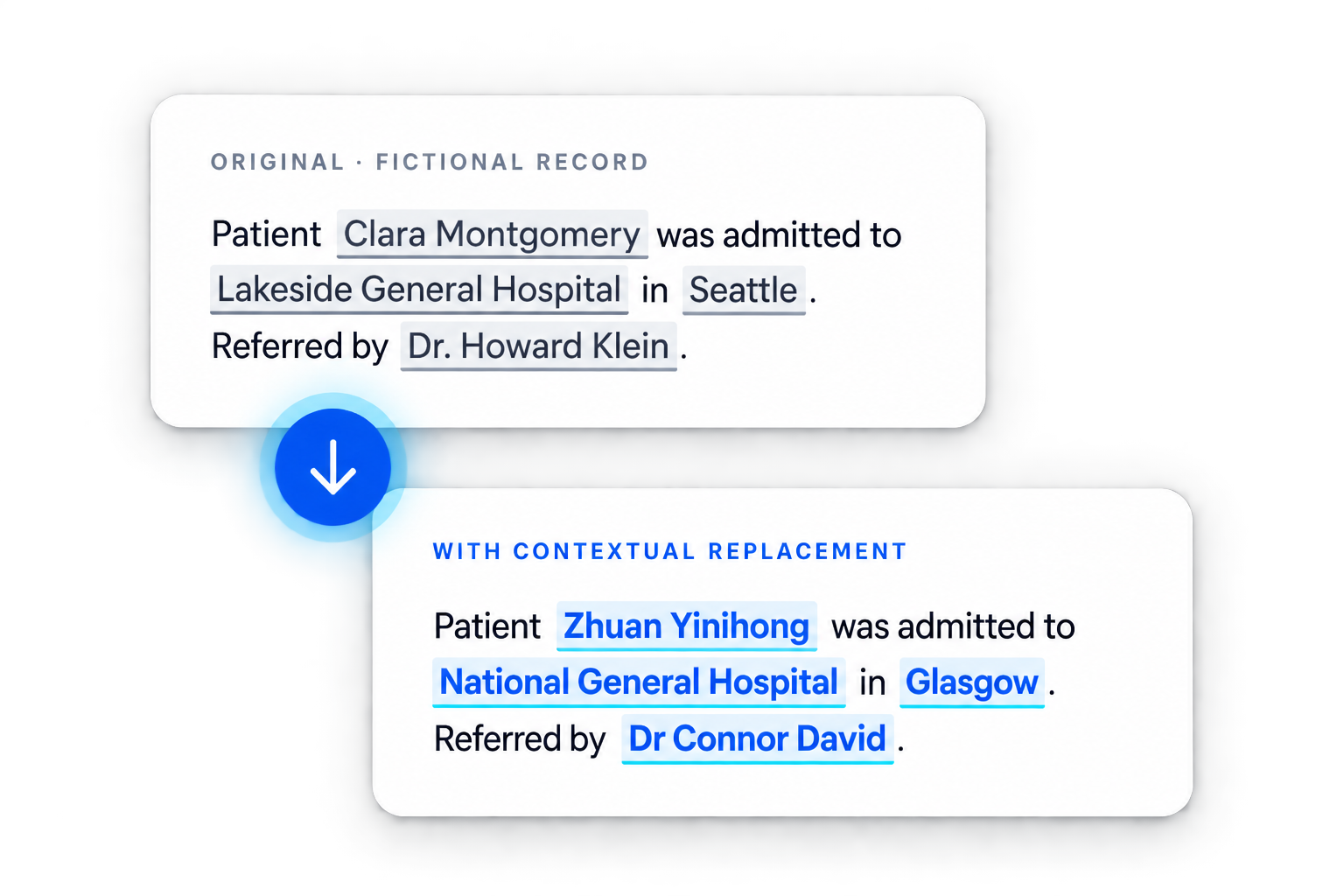
If you are evaluating how your organization handles PII across large volumes of documents, conversations, and records, Limina's data de-identification platform enables teams to automatically detect and remove personal information from text, images, audio, and documents -- with the context-awareness needed to catch what rule-based systems miss.
Who Within an Organization Is Responsible for PII?
Responsibility for PII within an organization is not the exclusive domain of the IT or legal team. It runs through multiple functions, and understanding where it sits is critical for building accountability structures that actually work.
Customer-facing employees -- salespeople, customer service representatives, and HR professionals -- are often the first point of contact with PII. They collect it, enter it into systems, and in some cases share it with third parties. Their training and conduct are foundational to organizational compliance. For industries like contact centers, where agents handle sensitive personal information in high volumes every day, this layer of accountability is particularly consequential.
The IT department bears responsibility for the infrastructure that processes and stores PII. That includes securing networks and endpoints, implementing security controls, and ensuring that communication channels used to transmit PII meet applicable standards. As more data flows through cloud environments and AI-powered systems, the IT team's scope of responsibility has grown considerably.
For teams building AI applications over internaldocuments, RAG pipeline adds anotherlayer to that accountability. A retrieval-augmented generation (RAG) system canpull PII from indexed files straight into model responses, so IT teams need toknow what personal data sits in those files before they're indexed.
Legal and privacy teams develop the policies and procedures that govern how PII is handled, ensure compliance with applicable laws, and lead the organization's response in the event of a breach. In larger organizations, this function may also include formal privacy impact assessments and third-party vendor reviews.
Ultimately, senior management and the board of directors are responsible for ensuring that the organization has adequate resources, processes, and risk management frameworks in place. PII protection is not a purely technical problem -- it requires investment decisions, governance structures, and leadership accountability.
What Is a Data Protection Officer (DPO) and Who Needs One?
Under the General Data Protection Regulation (GDPR), certain categories of organizations are required to designate a Data Protection Officer (DPO). This applies to public authorities, organizations that carry out large-scale systematic monitoring of individuals, and organizations that process special categories of sensitive data at scale.
The DPO's role is to advise the organization on data protection obligations, monitor compliance with the GDPR, and serve as the primary point of contact for supervisory authorities. Critically, the DPO reports directly to the highest management level of the organization -- not to a department head. This structure is designed to insulate the DPO function from organizational pressure that might otherwise compromise their independence.
One common misconception is that the DPO is personally liable for data protection compliance. They are not. The DPO's job is to advise and monitor; responsibility for compliance lies with the organization itself.
What Laws Require Organizations to Protect PII?
The legal landscape for PII protection has become considerably more complex over the past two decades, with obligations layered across sector-specific rules, national frameworks, and international regulations.
In the United States, the Health Insurance Portability and Accountability Act (HIPAA) requires healthcare providers, health plans, and their business associates to protect protected health information (PHI) -- a category that overlaps significantly with PII. The penalties for non-compliance can reach into the millions of dollars per violation category per year. For organizations working in healthcare or pharma and life sciences, HIPAA compliance is not optional, and the technical safeguards it requires have grown more demanding as data environments have become more complex.
The Gramm-Leach-Bliley Act (GLBA) imposes parallel obligations on financial institutions, requiring them to protect consumers' non-public personal information. Banks, insurers, and other financial services organizations operating in the U.S. must implement written information security programs and notify customers about how their data is shared. The insurance sector carries its own overlapping compliance requirements, as both GLBA and state-level insurance regulations can apply simultaneously.
The European Union's General Data Protection Regulation (GDPR) is perhaps the most far-reaching data privacy law in force today. It applies to any organization that collects or processes the personal data of EU residents, regardless of where the organization is located. Under the GDPR, organizations must obtain valid consent before collecting personal data, implement appropriate technical and organizational safeguards, respond to data subject access requests, and notify supervisory authorities within 72 hours of discovering a breach. The extraterritorial scope of the GDPR means that a company headquartered in Toronto or Tokyo still has GDPR obligations if it has customers in Frankfurt or Paris.
Organizations handling PII at scale -- particularly across unstructured data sources like clinical notes, customer communications, or financial records -- face a significant operational challenge in meeting these requirements consistently. This is where automated data de-identification technology becomes not just convenient but necessary. Get in touch with Limina to see how organizations in regulated industries are using intelligent de-identification to operationalize compliance without slowing down their workflows.
What Role Do Governments Play in Protecting PII?
Governments occupy a dual role in the PII protection landscape: they set the rules that others must follow, and they are themselves subject to obligations when handling personal data collected through public administration, law enforcement, and national security functions.
In the public sector context, the United States Privacy Act of 1974 regulates how federal agencies collect, maintain, use, and disseminate PII. It requires agencies to protect records from unauthorized access, grant individuals the right to access their own records, and allow individuals to request corrections to inaccurate information. The Act reflects a foundational principle: that government collection of personal data carries an inherent accountability obligation.
The tension in government PII handling arises most acutely in national security and law enforcement contexts. Surveillance programs, criminal investigations, and counterterrorism operations all involve the collection and analysis of personal data. The legitimacy of these activities depends on striking a defensible balance between effective public safety operations and the protection of individual privacy rights -- a balance that remains contested in courts, legislatures, and public debate around the world.
At the regulatory level, governments create and enforce the frameworks that hold private organizations accountable. Regulatory bodies like the Federal Trade Commission in the U.S., the Information Commissioner's Office in the U.K., and national data protection authorities across the EU have investigative and enforcement powers that make PII protection obligations real rather than aspirational. Their enforcement actions, public guidance, and sector-specific rules shape how organizations design and operate their data governance programs.
Who Bears Ultimate Responsibility When a PII Breach Occurs?
This is a question that often does not have a clean answer -- and that ambiguity is itself part of the problem.
In practice, accountability after a breach tends to be distributed across the same layers that hold responsibility before one. If a customer-facing employee mishandled data, the organization is still accountable for failing to train them adequately. If a vendor suffered the breach, the organization is still accountable for failing to conduct appropriate due diligence. If the breach resulted from a known, unpatched vulnerability, senior management faces questions about resource allocation. Regulatory bodies generally hold organizations, not individuals, responsible for the systemic failures that allow breaches to occur.
The individual data subject who was harmed does not typically bear any formal responsibility -- they are the victim. But their practical recourse depends on the robustness of the regulatory framework and the willingness of enforcement bodies to act. In jurisdictions with strong data protection laws and active regulators, organizations face meaningful consequences for failures. In others, accountability is less reliable.
This is why forward-looking organizations do not treat PII protection as a reactive, breach-response problem. They build it into their data architecture from the beginning -- through technical controls, organizational policy, and ongoing training -- rather than relying on incident response after the fact.
If your organization is processing sensitive data and needs a scalable, accurate way to identify and remove PII before it creates risk, explore Limina's approach to data de-identification and see how it supports compliance across industries and regulatory frameworks.